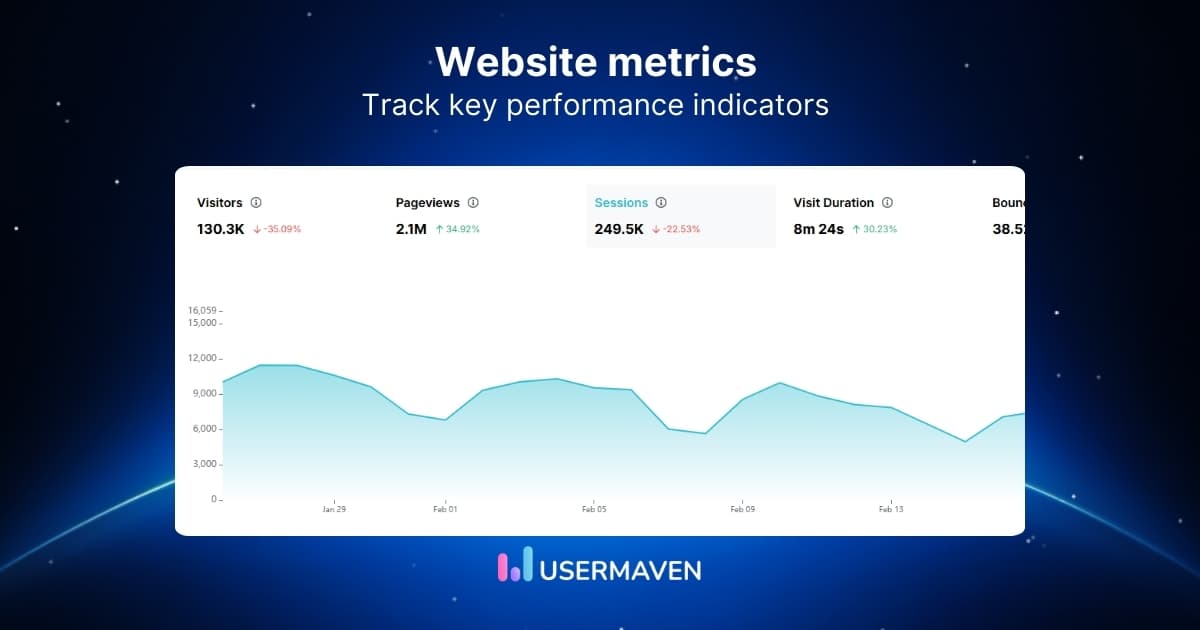
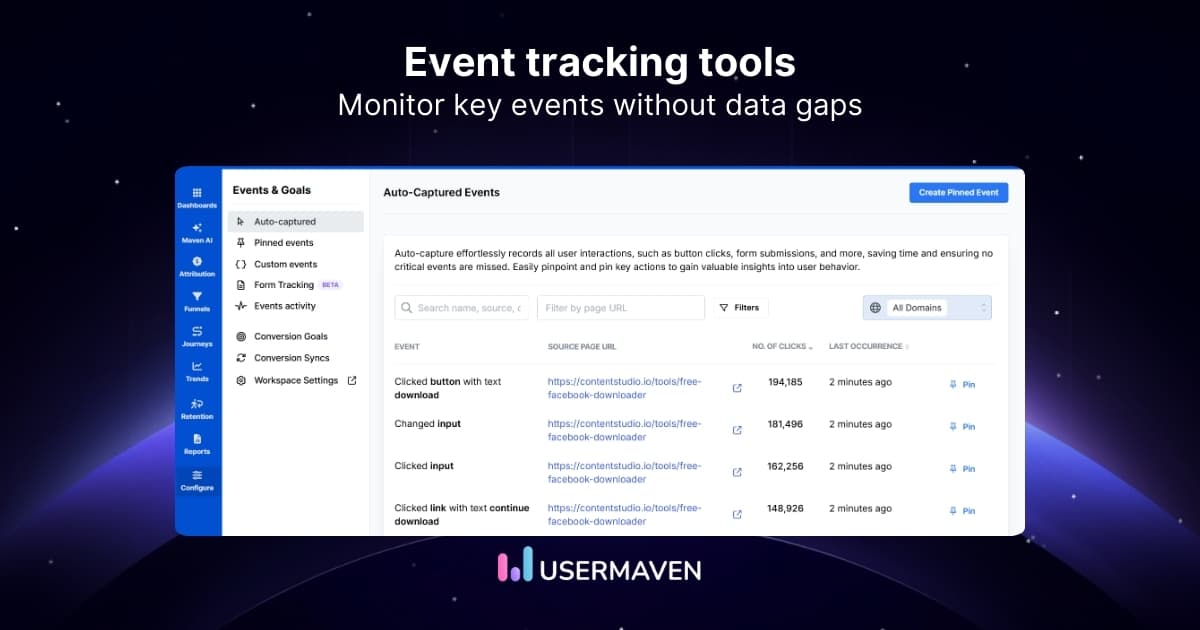
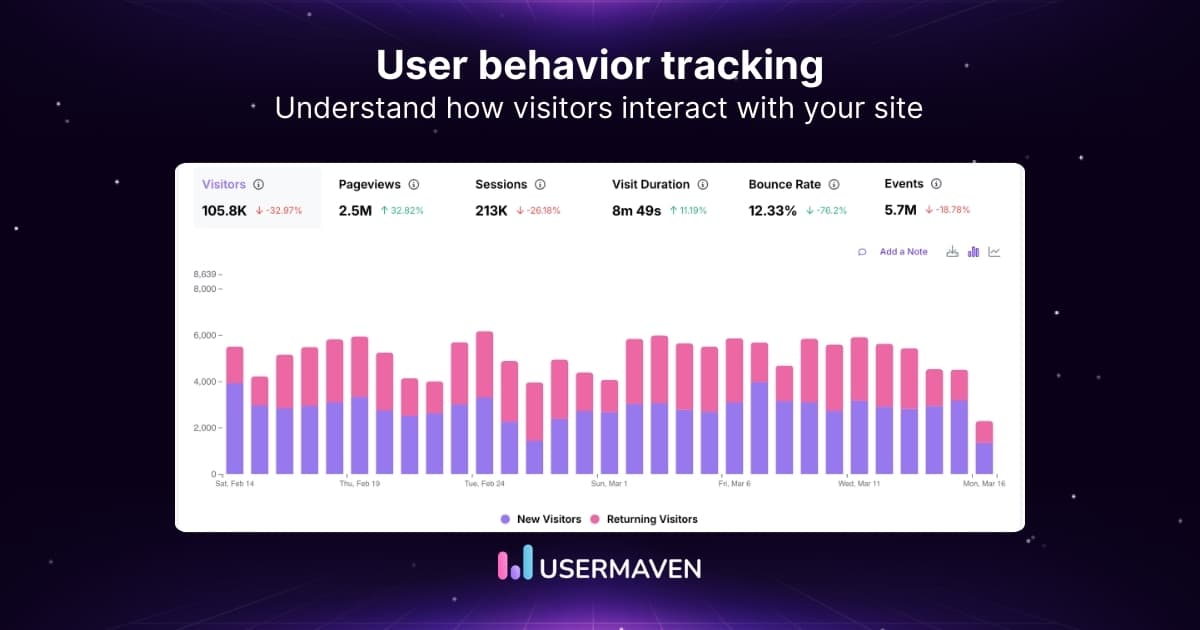
As online competition grows across industries, studying website traffic has become a key skill for marketers and business owners. It’s not just about knowing how many visitors a site gets – you also gain insights into where they’re coming from, how they behave, and what you can do to attract them in a more effective way.
Is there a simple method for seeing how visitors interact with a site?
In this article, we’ll walk through how to check traffic on any site using Usermaven. You’ll learn the basics of website traffic, the reasons for monitoring it, and how Usermaven can simplify your analytics tasks without the heavy complexity some other tools require. We’ll also dig into advanced tips, common challenges, and the best ways to tackle them. Let’s get started.
Understanding website traffic basics
At its core, website traffic represents far more than simple visitor counts. It encompasses the entire spectrum of user interactions with your digital content, forming a complex ecosystem of behavior patterns and engagement metrics.

Traffic sources explained
Different traffic sources each tell a unique story about how users find and interact with your site. Organic search traffic comes from people actively seeking answers through search engines, demonstrating high intent and specific information needs. These visitors often show deeper engagement as they’ve found your site while actively searching for relevant content.
Pro tip: Focus on understanding the intent behind each traffic source to better tailor your content strategy.
Direct traffic reveals a different aspect of your audience – those who already know your brand. When users type your URL directly or use bookmarks, it indicates strong brand recognition and loyalty. This traffic source often correlates with higher conversion rates as these visitors typically have clear intentions and familiarity with your offerings.
Behavior patterns across sources
Each traffic source exhibits distinct user behavior patterns that can inform your strategy. For instance, social media visitors often browse more casually, spending less time per page but potentially sharing content more frequently. Understanding these patterns helps tailor content and user experiences to match expectations across different channels.
Quick stats:
- Organic search visitors typically spend 2-3x longer on site
- Social media traffic shares content 5x more frequently
- Direct traffic has 30% higher conversion rates
Measuring engagement quality
Beyond raw traffic numbers, engagement quality metrics provide deeper insights into user behavior. Session duration, pages per visit, and bounce rates vary significantly across traffic sources. Organic search visitors might spend more time reading detailed content, while social media traffic might prefer quick, digestible information.
Important: Focus on quality metrics over quantity – high traffic means little without meaningful engagement.
Why monitor website traffic
Monitoring website traffic provides crucial insights that drive strategic decision-making and growth. Regular analysis helps businesses understand their online presence’s effectiveness and make data-driven improvements.
Strategic focus: Align traffic monitoring with your business objectives for meaningful insights.

Performance evaluation framework
Traffic monitoring serves as a comprehensive framework for evaluating marketing effectiveness. By analyzing traffic patterns, businesses can identify which initiatives generate meaningful engagement and which need refinement. This analysis encompasses metrics like conversion rates, user flow, and engagement depth.
Best practice: Set up regular monitoring intervals and benchmark against industry standards.
Audience insight development
Understanding traffic patterns reveals valuable information about your audience’s preferences and behaviors. This knowledge enables more targeted content creation and marketing strategies. By analyzing which content resonates with different traffic segments, you can better align your offerings with user needs.
Key areas to monitor:
- Content engagement patterns
- User journey flows
- Device preferences
- Time-of-day activity
Competitive analysis opportunities
Traffic monitoring provides insights into market positioning and competitive opportunities. By understanding industry trends and competitor performance through traffic analysis, businesses can identify market gaps and potential areas for differentiation.
Action point: Regularly analyze competitor traffic patterns to identify market opportunities.
ROI optimization
Traffic data directly impacts calculations by connecting marketing efforts to tangible results. Through careful monitoring, businesses can identify which channels and campaigns deliver the best results relative to their cost.
Updated

Written by
Adeel Khan
Growth Marketing Expert
Adeel Khan is a full-stack SaaS marketer with 10+ years of experience in content marketing, paid advertising, analytics, and conversion rate optimization. He shares practical insights and strategies drawn from hands-on experience, helping B2B SaaS marketers improve performance and make better marketing decisions.
All articles by Adeel →