User behavior can tell you a lot, but only if the data is easy to trust, explore, and act on.
That is why a Heap vs. Fullstory vs. Usermaven comparison is worth looking at closely. They all help teams understand what users are doing, but they differ in how much context they give around the journey.
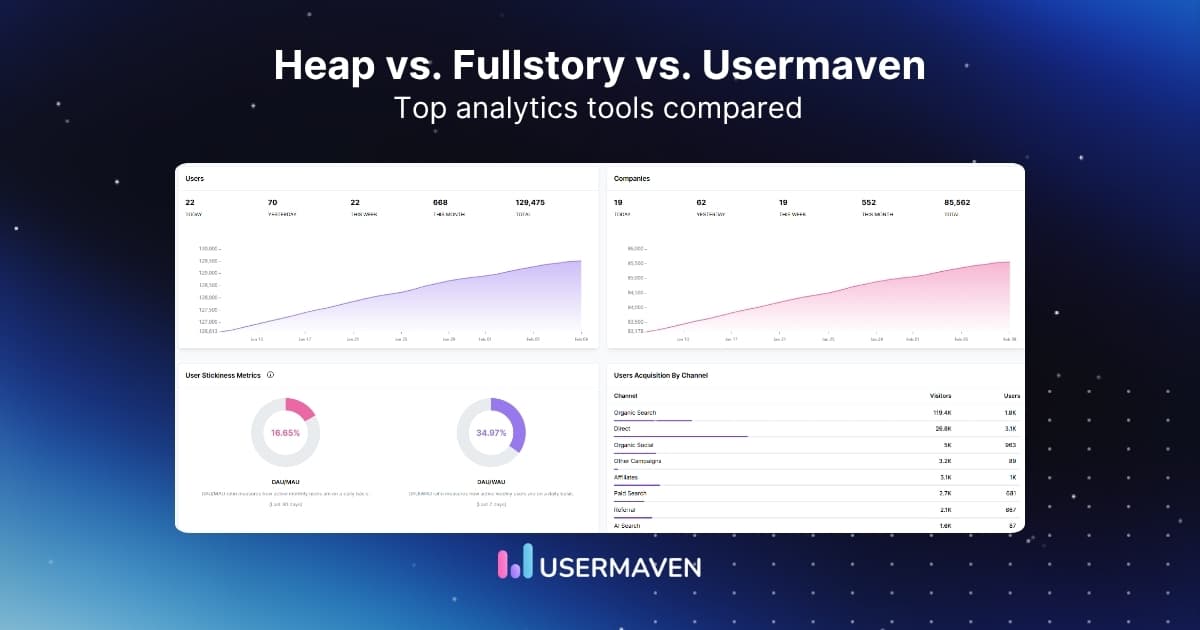
In this blog, we’ll break down the key features, pricing, use cases, and ideal fit behind each platform so you can see which analytics tool makes the most sense for your team.
Understanding the basics: Heap vs. Fullstory vs. Usermaven
Before getting into the feature-by-feature comparison, let’s get clear on what each platform is, where it fits, and what you should know before choosing one.
Heap
Heap is a digital analytics platform that helps teams track user behavior across websites and apps. It is mainly built around automatic data capture, which can be useful when teams want to explore product activity without setting up every event manually.
That can be useful when product teams want a flexible way to explore behavior. But teams that also need marketing attribution, campaign visibility, and a clearer picture of website activity may need to connect Heap with other tools.
Key features:
- Automatic event capture
- Product analytics
- Session replay
- Funnels and journeys
- Dashboards and behavioral reports
Target audience: Product, analytics, and growth teams that need behavioral data across websites and apps.
Pricing: Free plan available, but usage limits can become restrictive as traffic grows, while higher plans require contacting sales.
Fullstory
Fullstory is a digital experience analytics platform built around understanding how users interact with websites and apps. It is mostly used for reviewing sessions, spotting friction, and understanding where users run into problems.
That can be useful for UX and support workflows, but it may feel narrow for teams that also need attribution, product behavior analytics, and marketing performance in the same workflow.
Key features:
- Autocaptured user interactions
- Session replay
- Heatmaps
- Debugging tools
- Journey analysis
Target audience: UX, product, support, and digital experience teams that need to review sessions and troubleshoot user experience issues.
Pricing: Free plan available with usage limits, but advanced needs require moving to paid plans or contacting sales.
Usermaven
Usermaven is an advanced attribution platform that also gives teams a complete analytics setup. It helps teams see how people find their website, what they do after they arrive, and which touchpoints play a role before conversion.
It also keeps powerful analytics simple. With no-code tracking, lightweight setup, and AI-powered insights, teams can move from raw activity to clear answers without waiting on developers or piecing together reports from multiple tools.
Key features:
- Advanced attribution software
- Website analytics
- Product analytics
- AI-powered insights through Maven AI
- Funnels & user journeys
- Automatic event tracking
- Segmentation and dashboards
- Cookieless tracking
- Ad-blocker bypassing
Target audience: SaaS teams, marketers, founders, agencies, and product-led growth teams that want clear attribution and full-funnel analytics in one place.
Pricing: Transparent pricing starts at $84/month, with a free trial and a 15% discount available on annual billing.
Drive business growth
with AI-powered analytics
Feature comparison: Heap vs. Fullstory vs. Usermaven
Selecting the right analytics platform matters when you want to understand user behavior and improve digital experiences.
This feature breakdown shows how Heap, Fullstory, and Usermaven compare across the areas teams usually care about most.
| Feature | Usermaven | Heap | Fullstory |
| Website and product analytics | Built to connect website and product analytics | Available, with a stronger focus on product behavior | Available, with a stronger focus on digital experience |
| Automatic event capture | Yes | Yes | Yes |
| Multi-touch attribution | Yes | No | No |
| Funnel analysis | Advanced, with deeper conversion context | Yes | Yes |
| Cookieless tracking | Yes | Not a core focus | Not a core focus |
| Ad-blocker bypassing | Yes | Not a core focus | Not a core focus |
| GDPR and CCPA compliance | Yes | Yes | Yes |
| Ease of integration | Yes | Yes | Yes |
| Transparent pricing | Public pricing with a free trial and annual discount | Free plan available, but paid plans depend on usage and sales conversations | Free plan available, but paid pricing is sales-led |
1. Event tracking
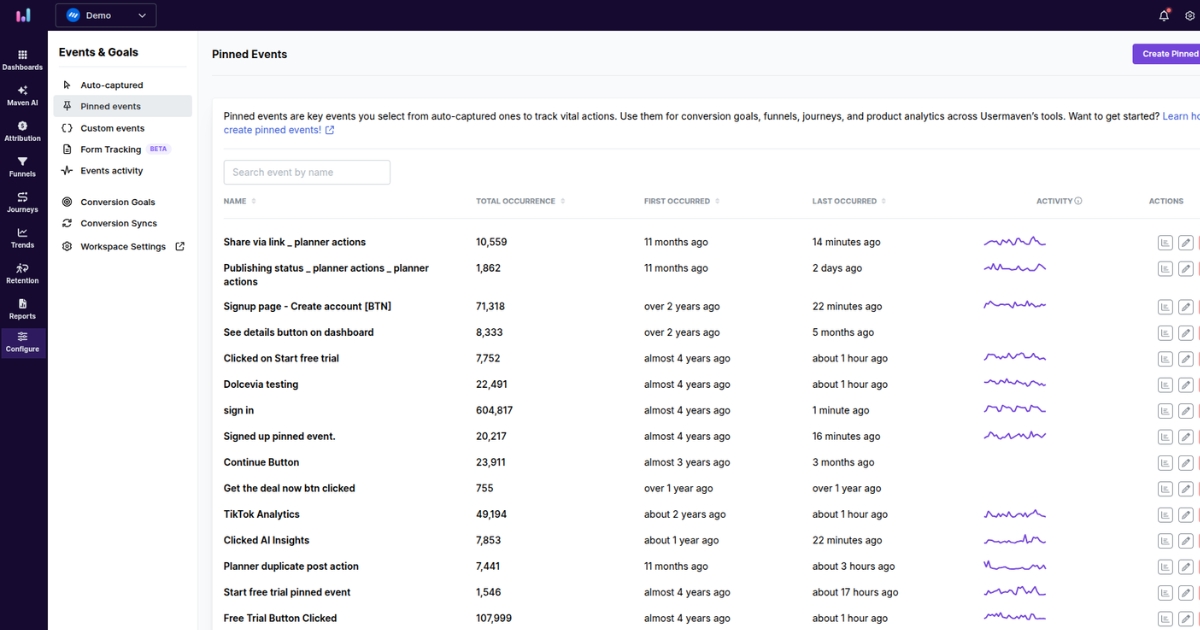
Usermaven keeps tracking simple from the start. It automatically captures key actions like pageviews, clicks, form submissions, purchases, and product events, so teams can understand behavior without turning every new question into a developer task.
Heap also offers automatic data capture, which helps teams collect product behavior and analyze it later. That works well for event-heavy tracking, but the value often depends on how clearly teams define, organize, and maintain that data.
Fullstory captures user interactions through Fullcapture, which supports session review and experience analysis. It gives teams visibility into what users did, but the focus stays closer to digital experience than broader growth analytics.
2. AI-powered analysis
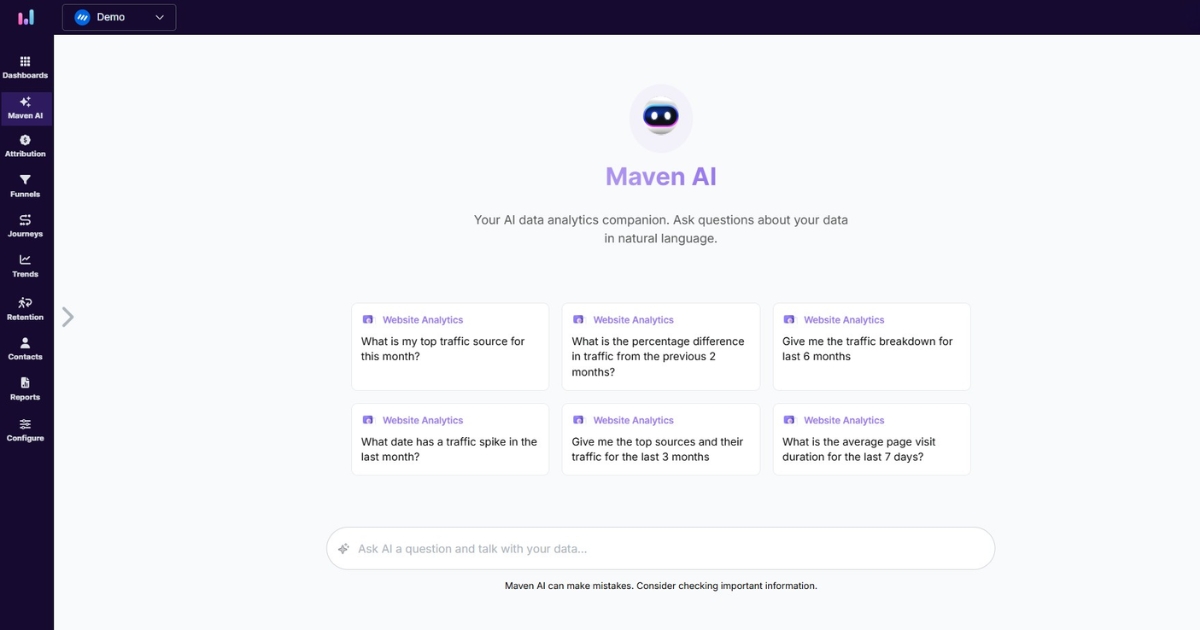
Usermaven uses AI to make analytics easier to act on. Maven AI helps teams ask questions, find patterns, understand drop-offs, and move from raw data to clear next steps without digging through reports manually.
Heap offers AI support through Contentsquare’s Sense on paid plans. It can help with analysis, but teams may need higher-tier access before AI becomes a meaningful part of the workflow.
Fullstory offers StoryAI for faster experience analysis. It is useful for reviewing behavior and summarizing sessions, but it is less focused on attribution, campaign impact, and full-funnel growth questions.
3. Attribution capabilities
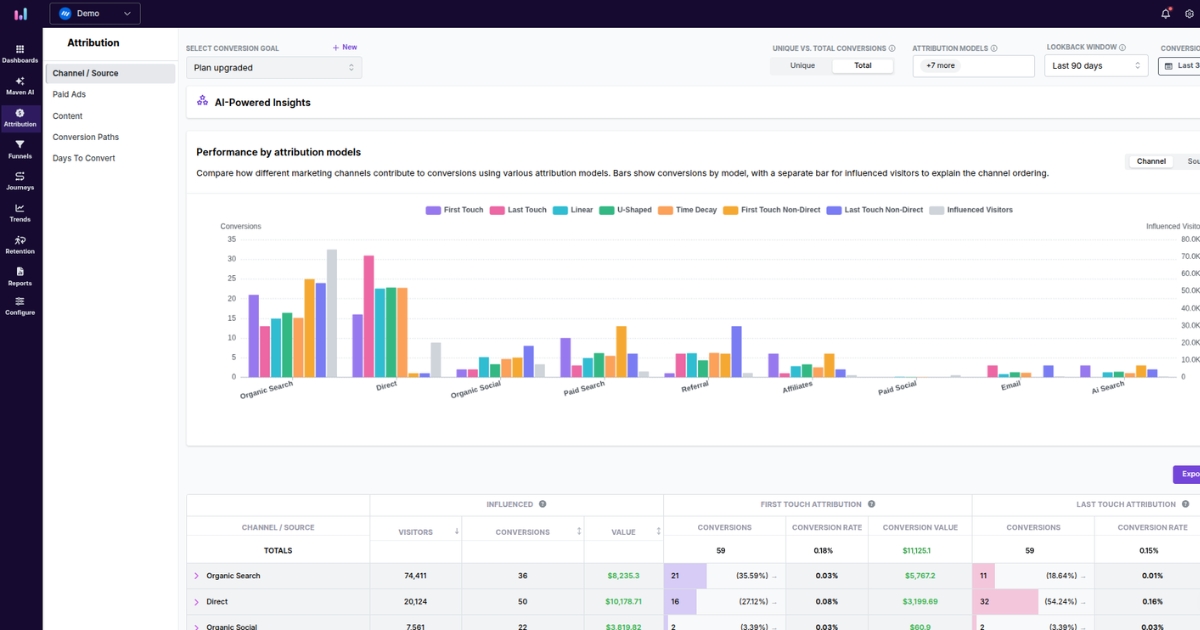
Usermaven is built for multi-touch attribution, so teams can see how different channels, campaigns, pages, and product actions contribute to conversion. Instead of giving credit to just one touchpoint, it helps connect the full journey from first visit to paid customer.
Heap can show what users do after they arrive, but attribution is not its core strength. Teams that need multi-touch attribution may still need to connect Heap with other tools.
Fullstory focuses more on behavior inside the digital experience. It can show what happened during a session, but it is not built to show which marketing touchpoints helped drive the conversion.
4. Funnel visibility
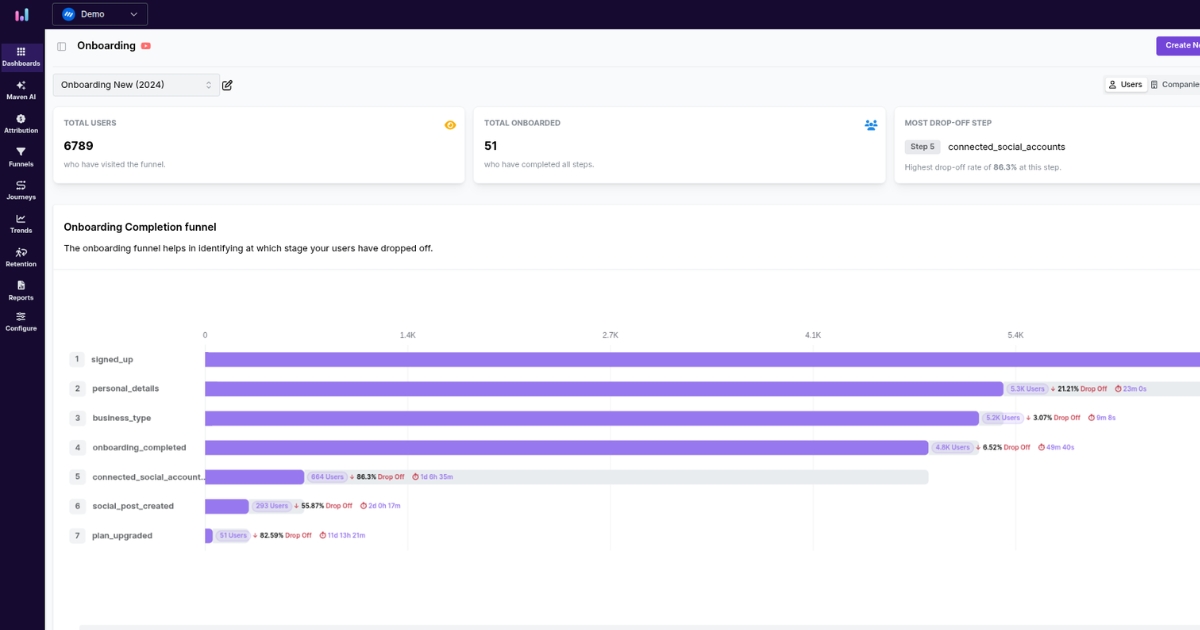
Usermaven gives teams a clear way to analyze funnels, user journeys, and conversion paths in one place. That makes it easier to spot where users drop off, what moves them forward, and how behavior connects to growth.
Heap includes funnel and journey analysis for product behavior. It can show where users drop off, but teams looking for marketing or attribution context may need more around it.
Fullstory also supports funnels and journey analysis. Its strength is in spotting friction inside the experience, not connecting every funnel step back to acquisition and revenue.
5. Reporting experience
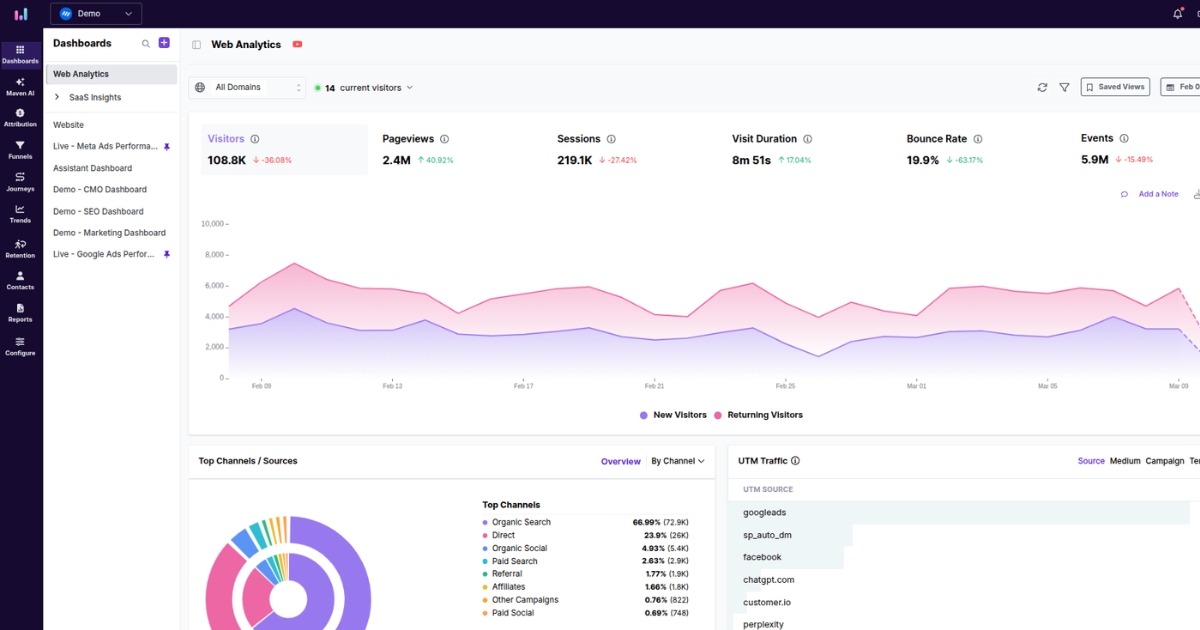
Usermaven is designed to make insights easy to access. Teams get dashboards, real-time reports, email and Slack summaries, and a clean interface that helps marketers, founders, and product teams move faster.
Heap offers dashboards, reports, charts, and exports. It is flexible, but teams may need more setup before the data feels easy to read and act on.
Fullstory gives teams dashboards, alerts, metrics, and session-based reporting. That works well for reviewing user experience issues, but it stays more centered on behavioral and replay context.
6. Privacy-first tracking
Usermaven is built with privacy and data accuracy in mind. It supports cookieless tracking, GDPR and CCPA compliance, EU hosting, ad-blocker bypassing, and bot traffic exclusion. That helps teams keep analytics reliable without invasive tracking.
Heap includes privacy and compliance controls, but cookieless analytics and ad-blocker bypassing are not central to its positioning. For teams worried about missing traffic data, that can be a real gap.
Fullstory offers privacy controls for session recording, consent, and sensitive data masking. That is useful when teams need to protect sensitive information in replays, but it does not solve broader tracking gaps caused by cookie limits or blockers.
7. Search and campaign data
Usermaven helps teams connect search visibility with user behavior through Google Search Console integration. Teams can see which keywords and landing pages bring visitors, then connect that activity with conversions, product engagement, and customer data. It also integrates with CRMs, ad platforms, and marketing tools, giving teams a clearer view of which sources bring traffic and which ones bring users who actually move forward.
Heap offers integrations and enrichment options, which can help teams connect behavioral data with other tools. But search, campaign, and attribution reporting usually need extra setup or a separate workflow.
Fullstory supports integrations, webhooks, data export, and warehouse use cases. That helps teams move data around, but it does not give marketers the same built-in view of acquisition-to-conversion performance.
8. Pricing transparency
Usermaven makes pricing easier to understand before you sign up. Plans are public, the feature breakdown is clear, and teams can start with a free trial instead of going through a sales process just to understand the cost.
Heap offers a free plan, but it is limited by sessions and data history. Once usage grows, pricing becomes harder to estimate because higher plans are tied to sales conversations and custom needs. That can also push growing teams to consider a Heap alternative with pricing that is easier to evaluate upfront.
Fullstory also has a free plan, but it is more of an entry point than a clear path to scale. Teams that need more sessions or advanced features usually have to request a demo, which makes pricing less straightforward.
Use case breakdown: Heap vs. Fullstory vs. Usermaven
Choosing the right analytics platform comes down to what your team needs to understand better. Here’s how Heap, Fullstory, and Usermaven fit across different use cases.
Heap
Heap works well for teams that need a flexible way to understand product behavior across websites and apps. Its automatic tracking helps product and analytics teams explore user actions, build funnels, and study how people move through key flows.
Use cases:
- Product teams: Understand how users interact with features, onboarding flows, and conversion paths.
- Analytics teams: Build reports around funnels, journeys, retention, and behavioral patterns.
- Growth teams: Review where users lose momentum inside important product or website flows.
Scenario example: A product team wants to understand why users abandon a signup, onboarding, or checkout flow, then use that data to improve the experience.
Fullstory
Fullstory works well when the main problem is experiencing friction. It helps teams review sessions, spot usability issues, and understand where users struggle inside a website or app.
Use cases:
- UX teams: Review session replays and heatmaps to see where users hesitate, rage click, scroll, or abandon a flow.
- Support teams: Investigate user issues with more context than a ticket or screenshot can provide.
- Product teams: Find friction in onboarding funnel, forms, checkout, or feature usage by watching real user behavior.
Scenario example: A SaaS team uses session replay to understand why users drop off before completing setup or reaching activation.
Usermaven
Usermaven fits teams that want the full journey in one place. It brings marketing, product, and conversion data into one view, so teams can see the signals that matter and decide what to do next.
Use cases:
- Marketers: See which channels, campaigns, keywords, and landing pages contribute to conversions through multi-touch attribution.
- Product teams: Track activation, feature usage, retention, funnels, and in-app behavior without a heavy tracking setup.
- Founders and SaaS teams: Understand acquisition, engagement, and revenue impact without switching between disconnected reports.
- Agencies: Manage analytics and attribution across clients with cleaner reporting and privacy-friendly tracking.
Scenario example: A SaaS team wants to see which campaigns bring users who sign up, activate, and become paying customers.
Why it stands out:
- Full-journey visibility: Usermaven connects website visits, product activity, and conversion data, so teams can see the path from first touch to revenue.
- Multi-touch attribution: It shows how different channels and touchpoints contribute to conversions instead of giving credit to only one source.
- AI-powered answers: Maven AI helps teams ask questions, find patterns, and turn analytics into next steps faster.
- No-code setup: Teams can track key actions without relying on developers for every new event or report.
- Transparent pricing: Public plans, a free trial, and clear plan details make it easier to evaluate before committing.
To sum it up,
Heap and Fullstory can help you zoom in on different parts of the user journey. But if your team needs to understand what is driving growth, isolated views only take you so far.
Usermaven gives that analysis more context. As a powerful marketing attribution tool, it brings campaign performance, customer journeys, funnels, and product behavior together so the story behind each conversion is easier to follow.
Ready to see Usermaven in action? Explore the platform or book a demo for a closer look.
FAQs
1. What should I look for when comparing Heap, Fullstory, and Usermaven?
Look at what kind of questions you need the tool to answer. Heap is more useful for product behavior and event analysis, Fullstory is stronger for session replay and experience issues, and Usermaven is better when you need attribution, funnels, website activity, and product behavior in one place.
2. Is Fullstory pricing transparent?
Fullstory offers a free plan, but paid plan costs are usually based on usage and business needs. Teams comparing Fullstory pricing should check what is included in each plan, especially session volume, retention, integrations, and advanced features.
3. Why do pricing models matter when comparing these tools?
Pricing matters because analytics costs often grow with sessions, usage, retention, or advanced features. Usermaven has public pricing, while Heap and Fullstory become less straightforward once teams need higher limits or paid plans.
4. What is the best analytics tool for product-led growth teams?
The best analytics tool for product-led growth should connect acquisition, activation, product usage, funnels, and conversion data. Tools like Usermaven are useful here because they combine website analytics, product analytics, attribution, and funnel insights in one workflow.
5. Which tool is better for tracking the full customer journey?
Usermaven is the better fit if you want to track users from first visit to conversion. It connects website activity, product behavior, funnels, and multi-touch attribution, while Heap and Fullstory focus more on specific parts of the user journey.
Updated

Written by
Ryan Mitchell
Marketing Analytics Strategist
Ryan Mitchell is a marketing analytics strategist specializing in campaign measurement, customer journeys, and marketing performance. He writes about analytics, reporting, and data-driven marketing strategies, helping SaaS and B2B teams measure what matters across every stage of the customer journey.
All articles by Ryan →