

Ryan Mitchell
Marketing Analytics Strategist
Ryan Mitchell is a marketing analytics strategist specializing in campaign measurement, customer journeys, and marketing performance. He writes about analytics, reporting, and data-driven marketing strategies, helping SaaS and B2B teams measure what matters across every stage of the customer journey.
Read articles by Ryan
Marketing Mix Modeling for small businesses: A readiness guide
Marketing mix modeling used to sound like something only global brands with television budgets, data-science teams, and years of sales history could use. Open-source frameworks and automated MMM tools have lowered that barrier, but they have not removed the data requirements. The useful question is not whether a company is “big enough” for MMM. It […]
Ad platform reporting limitations: What dashboards miss
Meta says ROAS is 5.1×. Google says its campaigns generated 140 conversions. LinkedIn reports influenced pipeline. Your CRM shows fewer paying customers than the platforms appear to claim. None of those reports necessarily has to be broken. The systems are observing and calculating different things. Native ad dashboards have different ecosystem visibility, identity signals, attribution […]
Podcast attribution: How to track impact and revenue
A listener hears your company on a podcast during their commute. Twelve days later they Google the brand, read two articles, return through LinkedIn, and request a demo. Analytics says “Organic Search.” The buyer says “Podcast.” Both can be correct. Podcast exposure often happens away from the website, without a click, on another device, and […]
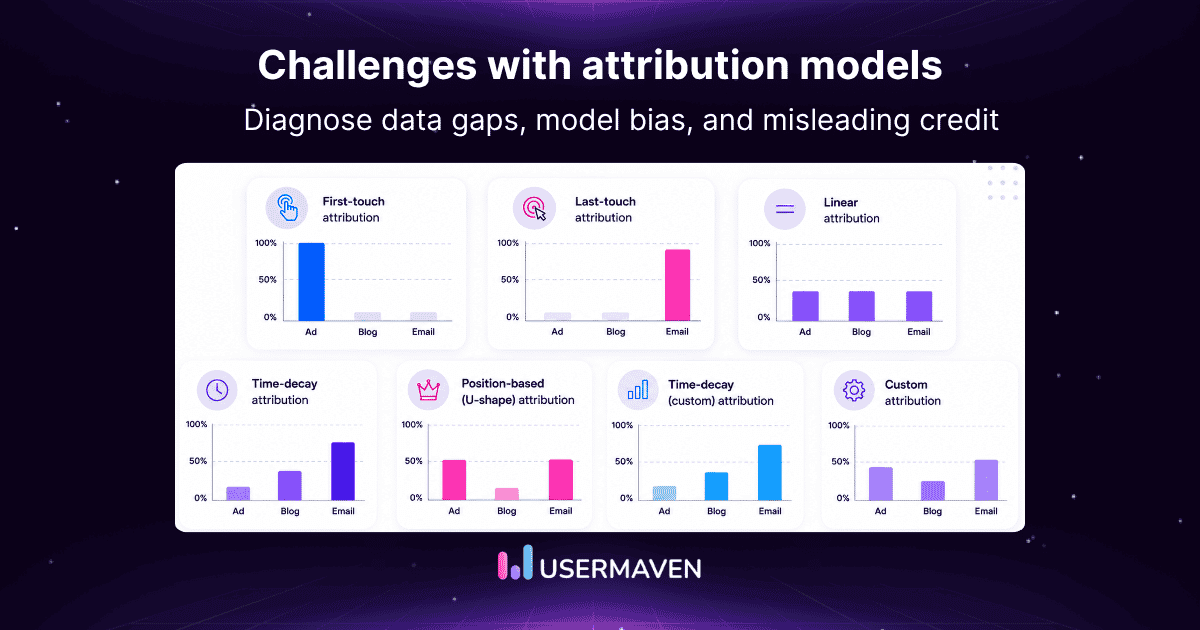
Challenges with attribution models: 9 problems and fixes
Google Ads says it drove the sale. Meta says the same. The CRM credits Direct, while a last-touch report says branded search won. The customer journey did not change; only the measurement lens did. That contradiction is why attribution problems are often blamed on the model first. In reality, the failure may begin earlier with […]
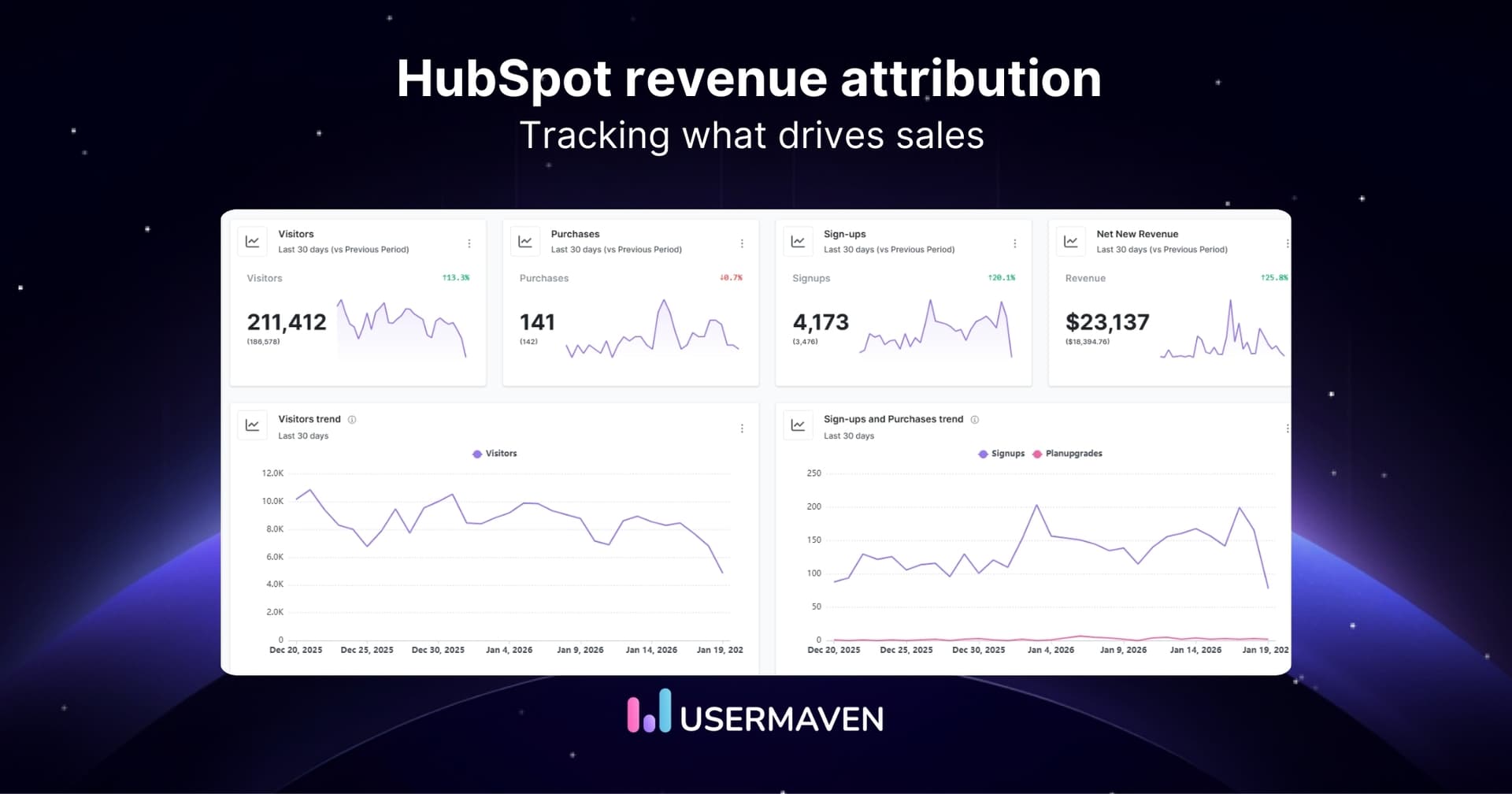
HubSpot revenue attribution: Setup, models & limits
HubSpot can show which marketing interactions receive credit for Closed Won deal revenue, but the report is only as reliable as the contact, deal, tracking, and association data underneath it. That matters because HubSpot changed both its attribution terminology and model set in 2026. What many teams still call Revenue Attribution is now documented as […]
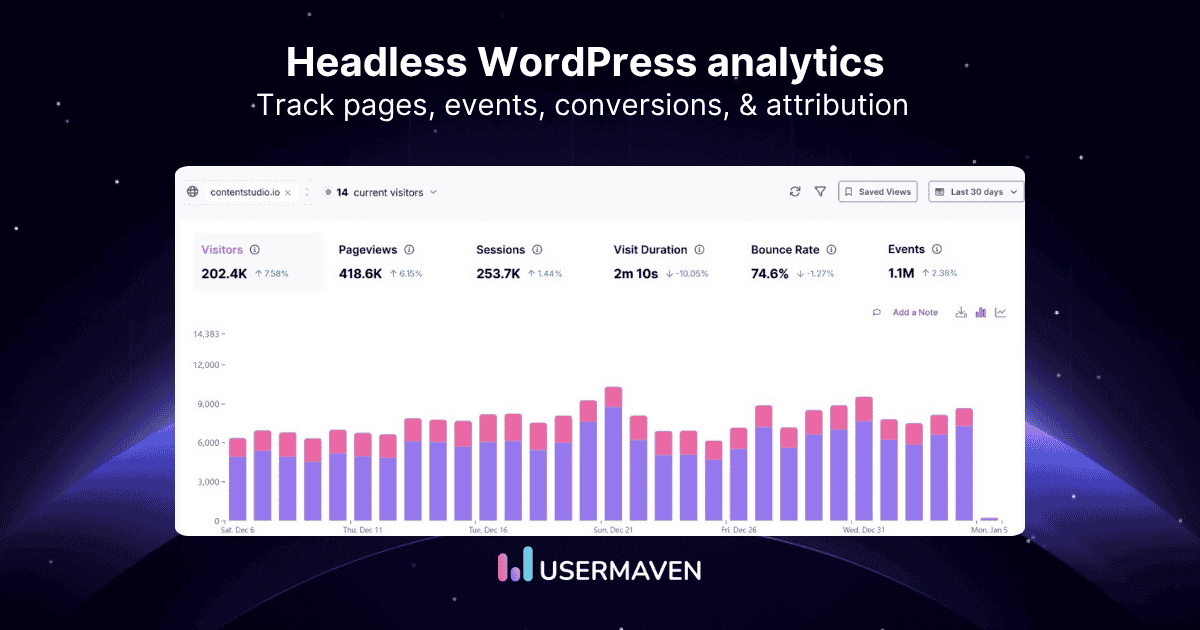
Headless WordPress analytics: Setup and tracking guide
Going headless changes more than how WordPress renders pages. WordPress may manage the content, but visitors interact with a separate Next.js, Nuxt, Astro, React, Vue, or other frontend. The customer-facing website analytics layer must follow that frontend. A traditional analytics plugin can be installed correctly inside WordPress and still never reach the browser. SPA navigation, […]
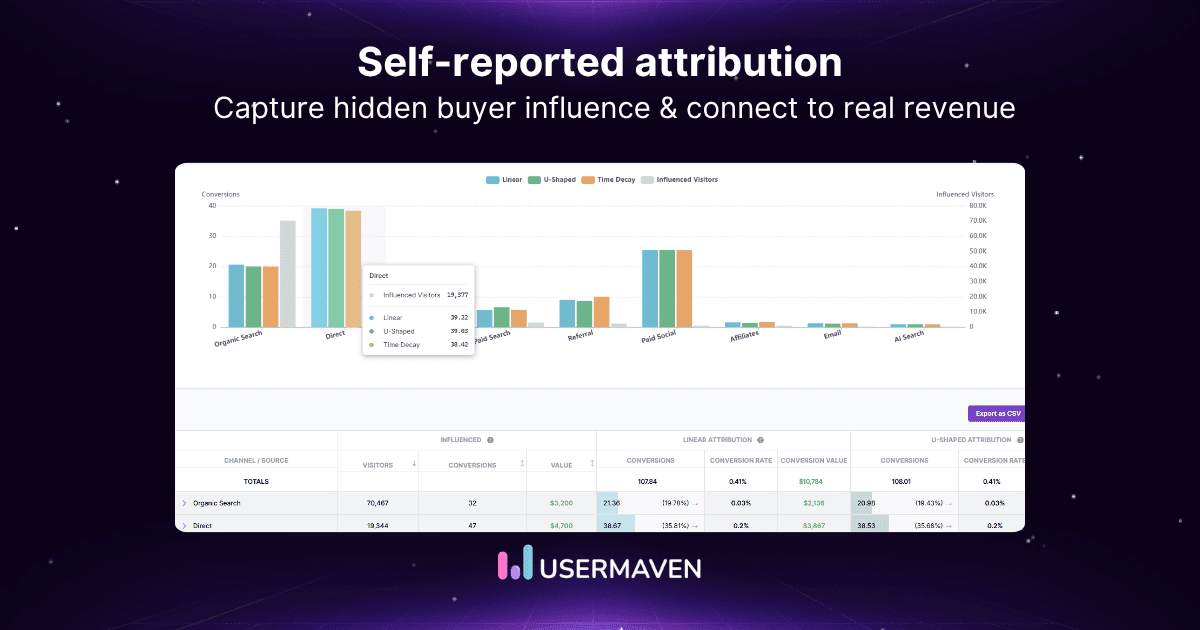
Self-reported attribution: What it is & how to use it
Analytics says a buyer came from branded Google search. On the demo form, the buyer writes that they first heard about the company on a podcast. Neither answer has to be wrong. One records an observable visit; the other records what the buyer remembers. Self-reported attribution is useful precisely because important discovery often happens where […]
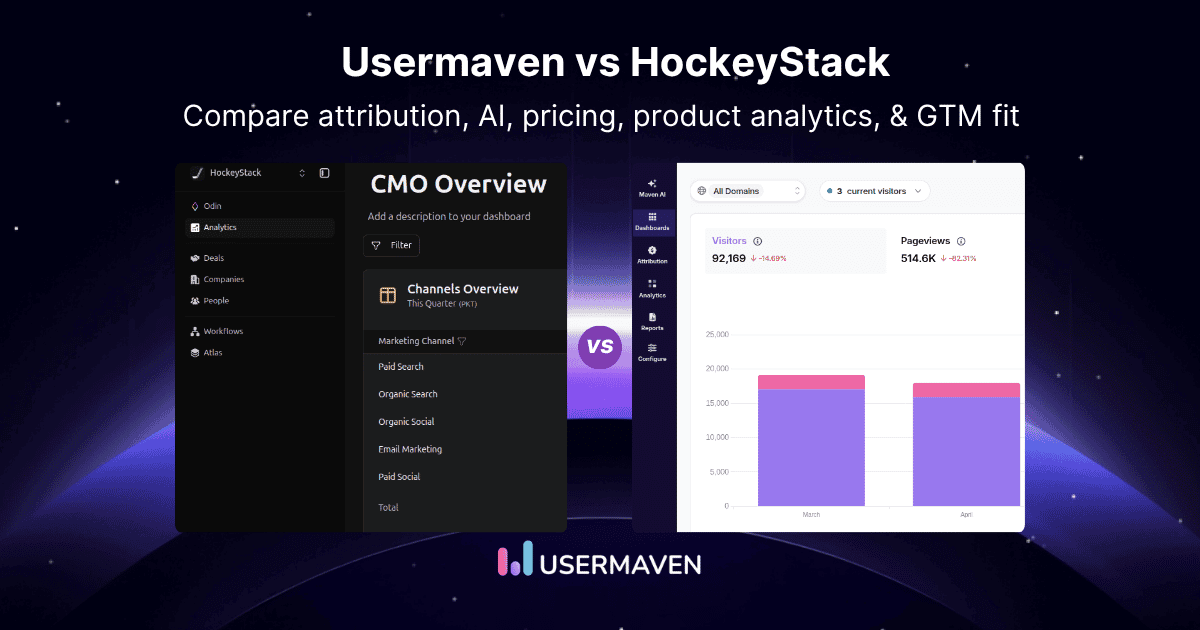
Usermaven vs. HockeyStack: Which is better in 2026?
Usermaven and HockeyStack both help teams connect marketing activity with revenue, but they now solve different versions of the problem. Teams comparing marketing attribution software should look beyond attribution checkmarks and ask what happens before and after the attributed conversion. HockeyStack has expanded into enterprise GTM intelligence, account scoring, incrementality, and AI-driven revenue workflows. Usermaven […]
Multi-touch attribution: Models, examples & guide
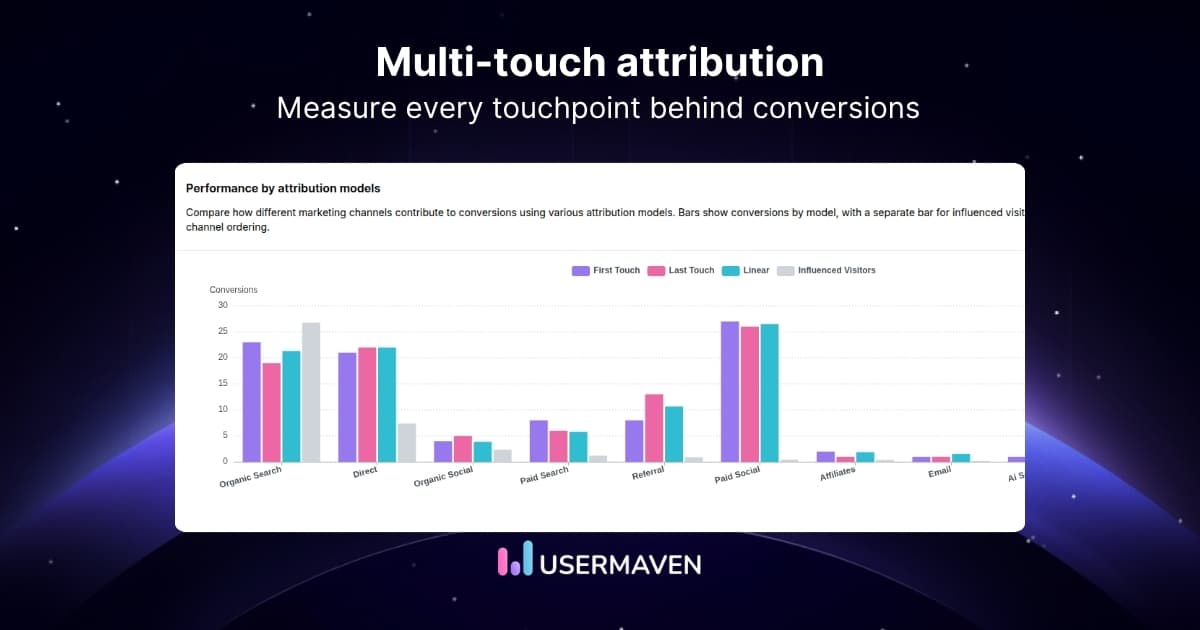
Multi-touch attribution helps marketers understand how several interactions contribute before a customer converts instead of giving all the credit to one click. A strong marketing attribution software setup preserves those interactions long enough to evaluate how channels work together. But the model is only as reliable as the journey underneath it. Missing touchpoints, broken identity […]