Amplitude analytics is a well-known name in the analytics space, offering a comprehensive suite of tools to track user behavior and drive data-driven decisions. It has a robust feature set, but with that comes complexity and a pricing structure that doesn’t always align with the needs of smaller teams or startups.
For many businesses, navigating through its layers of functionality can feel more challenging than expected. While Amplitude delivers depth, it often leaves teams wishing for a solution that is straightforward, intuitive, and more budget-friendly.
This blog explores the core features of Amplitude analytics, its potential drawbacks, and an alternative tool that prioritizes simplicity without sacrificing value.
Let’s take a closer look at what makes Amplitude analytics unique and why Usermaven might be the alternative you’ve been searching for.
What is Amplitude analytics?

Amplitude analytics is a platform designed to help businesses make sense of user behavior. It provides advanced tools like event tracking, funnel analysis, and retention metrics to support data-driven growth. Companies use it to gain deeper insights into how users interact with their products, enabling them to refine experiences and boost engagement.
Despite its strengths, Amplitude analytics often caters to larger organizations with complex needs. Smaller teams or startups might find it challenging to navigate its extensive features or justify the cost. While the platform excels in depth, it doesn’t always align with the priorities of businesses looking for simplicity and efficiency.
For such teams, Usermaven offers a more accessible approach to analytics – focused, easy to use, and designed to deliver insights without unnecessary complexity.
Key features of Amplitude analytics
Amplitude analytics provides a range of tools to help businesses understand user behavior and make informed decisions. From event tracking to retention analysis, it offers features designed to uncover insights and drive growth. However, its complexity and steep learning curve can make it challenging for smaller teams to fully leverage its capabilities.
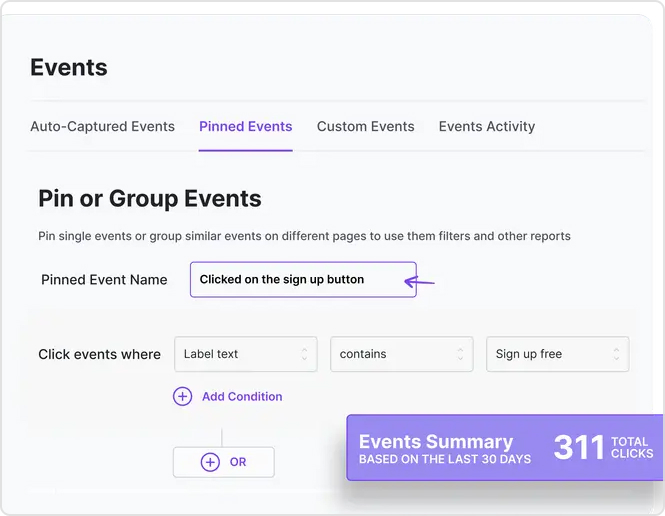
Event tracking and detailed user segmentation
Amplitude analytics allows businesses to track user events and segment them based on behaviors and characteristics. This feature is crucial for understanding how users interact with your product. However, the level of detail and customization available can feel overwhelming for smaller teams or those without dedicated analytics expertise, often requiring significant setup time.
Funnel analysis
With funnel analysis, amplitude helps map out the steps users take within your product, revealing where drop-offs occur. This can be invaluable for optimizing conversion paths. On the downside, the platform’s complexity may mean spending too much time configuring funnels instead of quickly acting on the insights.

Retention analysis
Amplitude’s retention analysis tracks user behavior over time to identify patterns that contribute to user retention. While this is helpful for spotting trends, extracting actionable insights often requires a steep learning curve. Smaller teams might struggle to translate these findings into clear strategies without additional resources.

Updated

Written by
Adeel Khan
Growth Marketing Expert
Adeel Khan is a full-stack SaaS marketer with 10+ years of experience in content marketing, paid advertising, analytics, and conversion rate optimization. He shares practical insights and strategies drawn from hands-on experience, helping B2B SaaS marketers improve performance and make better marketing decisions.
All articles by Adeel →