Before anyone becomes a loyal customer, they go through a series of tiny decisions. Some are intentional. Some happen without them even noticing.
And, these small moments decide whether they stay, leave, or choose a competitor.
This is why the stages of the customer journey matter so much. When you understand the steps people take, you can create better digital experiences, solve problems earlier, and guide them in the right direction.
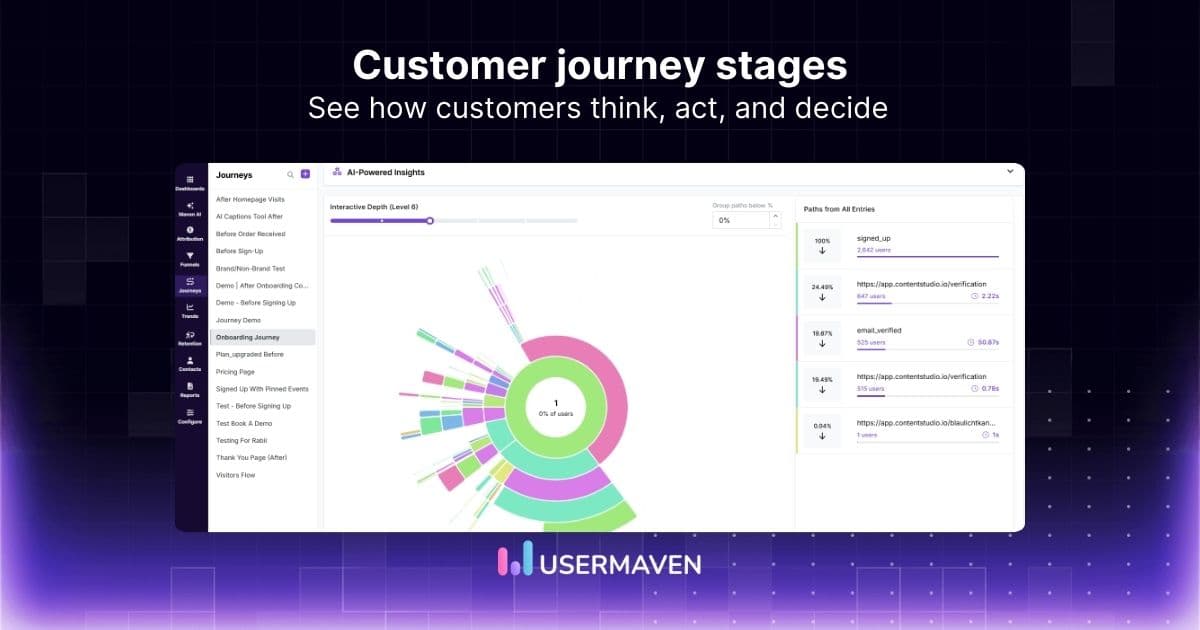
With that perspective in mind, it becomes easier to see how the main customer journey steps show up in real situations and how customer journey mapping brings more clarity to each stage. You’ll also notice how SaaS customer journey stages begin to shift as users explore the product and move toward long-term engagement.
Visualize & optimize
user journeys with Usermaven
What is the customer journey?
The customer journey is the complete experience someone goes through when interacting with your brand. It includes everything from discovering a problem to researching options, making a decision, using your product, and ultimately becoming a repeat customer or advocate.
A typical customer journey includes moments like:
- Realizing a need
- Searching for solutions
- Comparing options
- Making a purchase
- Using the product
- Sharing feedback or recommending it
Why tracking the customer journey matters
For ecommerce brands, SaaS companies, and digital-first businesses, the customer journey is rarely linear. People jump between devices, channels, and touchpoints. This makes it even more important to understand how they behave, what influences them, and where friction happens.
When you understand the customer journey, you’re able to:
- Identify what’s working and what’s not
- Personalize communication
- Improve user experience
- Build stronger loyalty
- Increase customer lifetime value
Read: Best customer journey management software
What are the stages of the customer journey?
The customer journey is the complete process a customer goes through when interacting with your brand, from the first point of contact to becoming a loyal advocate. For SaaS companies, this journey is particularly important because it often involves recurring revenue models, where customer retention and customer lifetime value (CLV) are critical.
The five essential steps of the customer journey are:
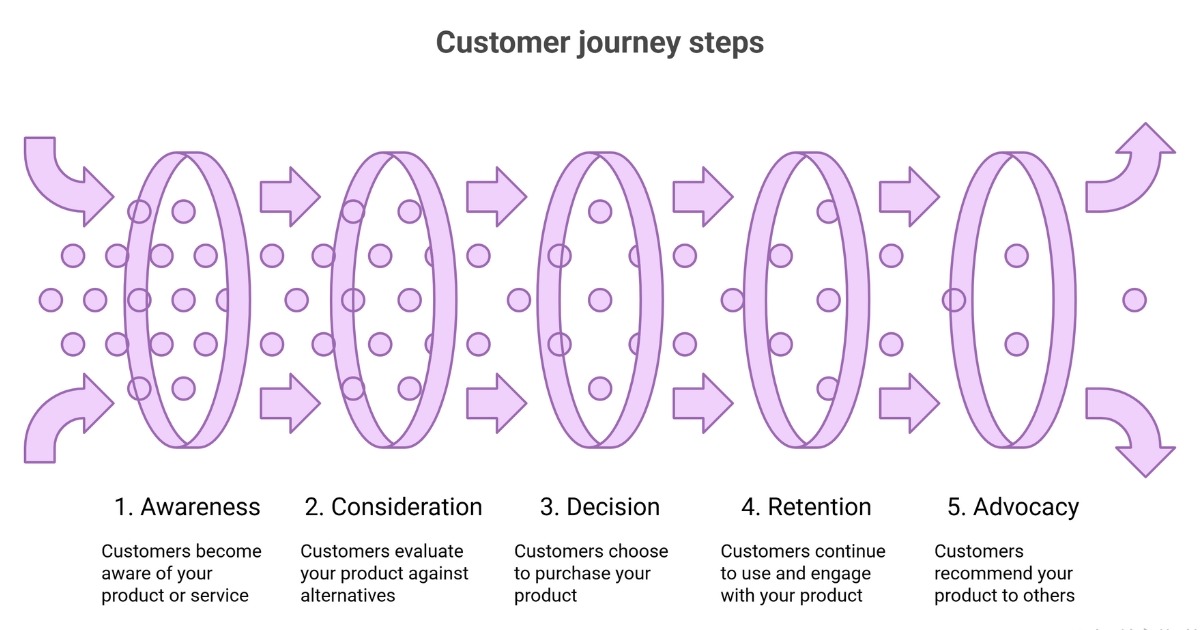
Let’s explore each stage in detail with examples and strategies.
1. Awareness stage
The awareness stage is where everything starts. At this point, customers are just realizing they have a problem or a goal they want to achieve. They’re not thinking about your product yet. They’re simply searching for information that helps them understand their situation better.
What customers are thinking: “I know what I want to fix, but I’m not sure what solutions exist.”
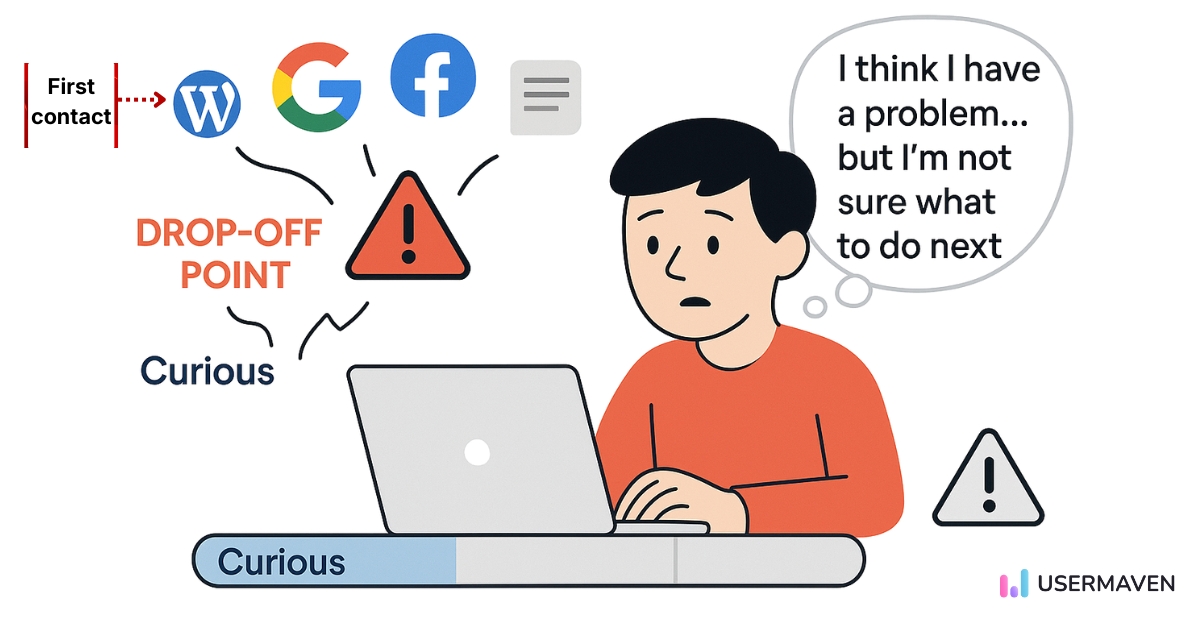
Common activities in this stage:
- Content marketing: Publish helpful blog posts, videos, checklists, or beginner-friendly guides that answer early questions and build trust.
- SEO optimization: Improve visibility so people find your content when they begin researching.
- Social engagement: Share useful insights and join conversations on platforms your audience uses to create familiarity.
Tip to optimize this stage:
Try to understand where people first discover your brand. When you know which channels and topics attract high-quality visitors, it becomes easier to focus your efforts in the right direction. This is where Usermaven is helpful because it reveals the true first-touch sources that drive buyer awareness.
Another simple way to improve performance at this stage is to create content that answers basic, early-stage questions instead of jumping straight into advanced topics. This helps you meet people exactly where they are in their journey.
Example:
A SaaS company like ContentStudio attracts potential customers by offering educational content on content marketing strategies, social media trends, and workflow automation, helping businesses improve their digital presence.
2. Consideration stage
Once customers understand their problem, they move into the consideration stage. Here, they’re actively exploring different ways to solve it and comparing available solutions. They know what outcome they want; now they’re figuring out which product, service, or approach can help them get there.
At this point, your job is to clearly communicate the value of your solution and show prospects why your product stands out.
What customers are thinking: “I know the kind of solution I need, but which option is the best fit for me?”
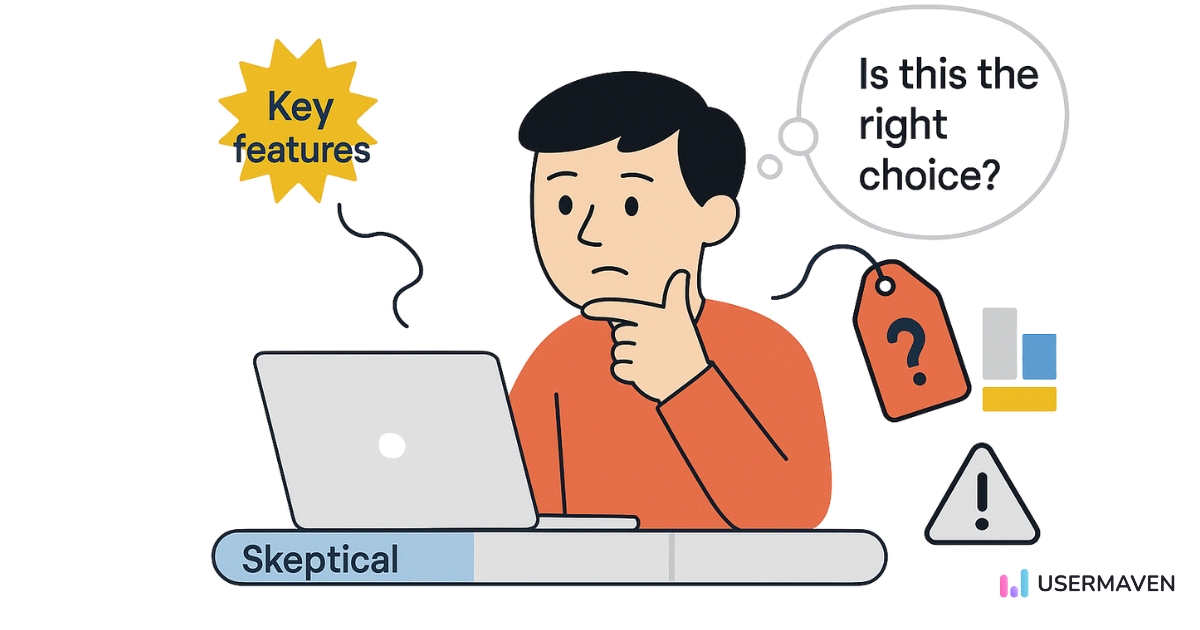
Common activities in this stage:
- Product demos and webinars: Host live walkthroughs, share feature highlights, and openly address customer questions to demonstrate how your product solves real problems.
- Case studies and testimonials: Show clear, relatable success stories from existing customers to build credibility and reduce doubts.
- Comparison guides: Create side-by-side comparisons that highlight your product’s advantages, helping prospects make informed decisions quickly.
Tip to optimize this stage:
This stage is all about understanding what interests users the most. With Usermaven’s behavior analytics, you can see which pages prospects engage with, such as features, pricing, or comparison pages.
For example, if Usermaven shows that users spend more time on the pricing page than expected, this may signal confusion or hesitation. Improving clarity, simplifying packages, or adding FAQs can resolve this friction and increase conversions.
Example:
ContentStudio offers a free trial or demo to show potential customers how their social media management platform can streamline content creation, scheduling, and analytics. By providing hands-on experience, they allow users to explore how the platform can simplify content management, automate social media posting, and offer detailed performance insights. This approach helps users grasp the value of the tool and how it can improve their content marketing strategy in a practical way.
3. Decision stage
The decision stage is where prospects are finally ready to take action. They’ve compared solutions, weighed features, and explored pricing. Now they just need the final nudge to choose the best option. At this point, your goal is to remove any remaining friction and make the path to purchase as smooth and reassuring as possible.
What customers are thinking: “I’m almost convinced, just show me why this is the right choice and make it easy to get started.”
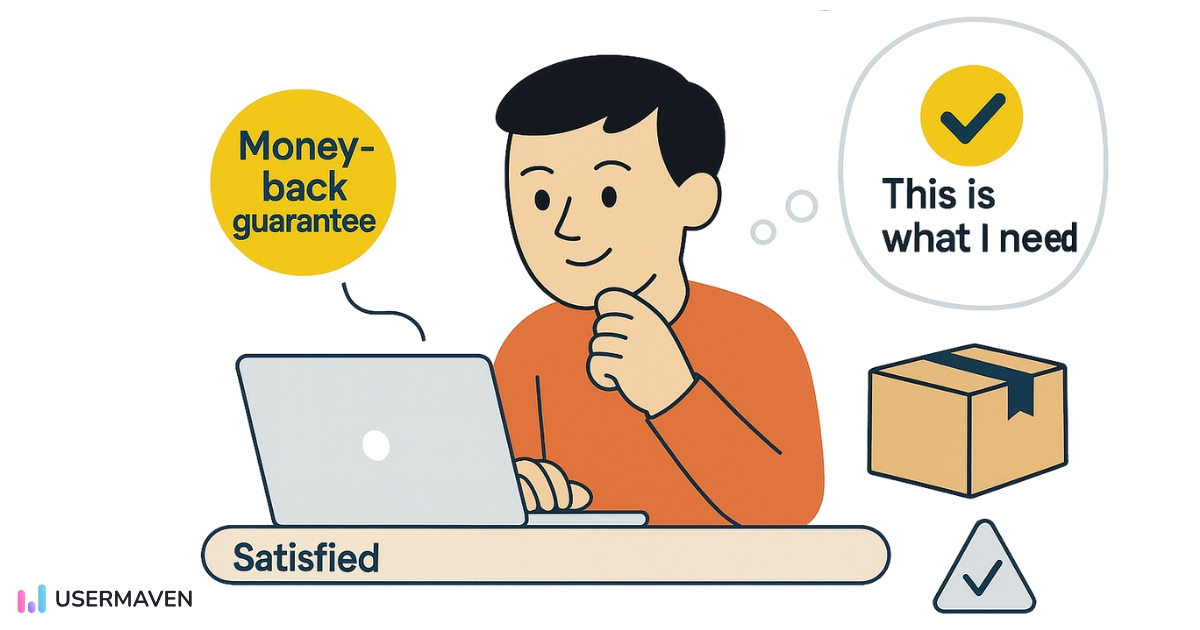
Common activities in this stage:
- Clear calls-to-action (CTAs): Use direct, action-oriented CTAs such as “Get Started,” “Upgrade Now,” or “Start Your Trial” to guide users toward completing the purchase confidently.
- Special offers: Offer incentives like limited-time discounts, extended trials, or bonus features to help prospects feel rewarded for taking the final step.
- Responsive customer support: Provide fast, supportive assistance through live chat, help docs, or email to eliminate any last-minute doubts. Quick answers often make the difference between a completed purchase and an abandoned one.
Tip to optimize this stage:
Usermaven can help you identify exactly where users get stuck in the checkout or signup process. For example, you may discover that users drop off at the payment step because the form is too long or confusing. By simplifying fields, offering more payment methods, or adding trust badges, you can significantly improve conversions.
Another useful tactic is to test different CTAs, pricing formats, and offer placements. Small optimizations at this stage can create big lifts in paid conversions.
Example:
ContentStudio offers additional features or extended access for users who sign up for a premium plan. By providing a tangible benefit, they encourage users to commit to the platform, helping them see the value of upgrading.
4. Retention stage
The retention stage focuses on keeping customers satisfied, engaged, and consistently experiencing value long after they’ve subscribed. For SaaS businesses, this stage is essential because long-term growth depends on recurring revenue, not just new signups. When customers feel supported and continually find value in your product, they’re far more likely to stay, upgrade, and advocate for your brand.
What customers are thinking: “I’ve signed up, now I want to make sure this product continues to help me achieve my goals.”
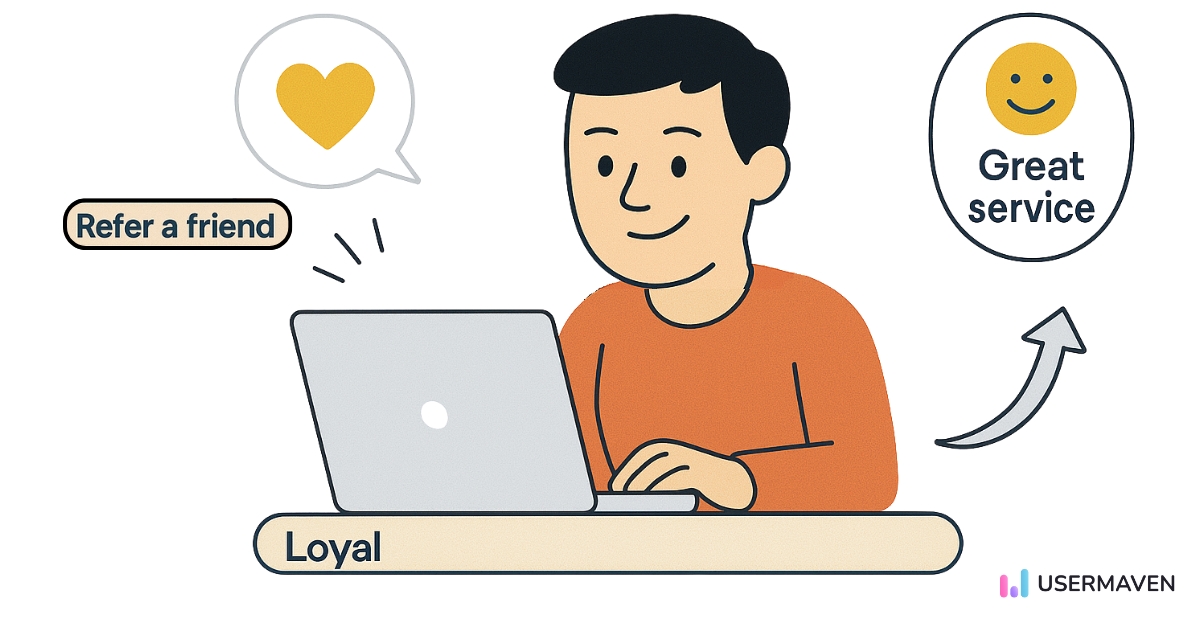
Common activities in this stage:
- Seamless onboarding: A smooth onboarding flow helps customers quickly understand how to use your product. Clear tutorials, guided tours, and helpful documentation ensure users get immediate value from day one.
- Reliable customer support: Provide fast, helpful responses when customers encounter challenges. Strong support builds trust and prevents users from becoming frustrated or considering churn.
- Engagement campaigns: Use personalized emails, product tips, newsletters, and feature announcements to keep customers active and aware of everything your product offers. Regular touchpoints keep your brand top-of-mind and encourage continuous usage.
Tip to optimize this stage:
Usermaven gives you visibility into how customers behave after onboarding, how often they log in, which features they use, and where engagement drops. If data shows customers become inactive after the first month, it signals areas where onboarding or early engagement might need improvement.
By addressing these drop-off points early, you can significantly reduce churn and improve customer lifetime value.
Example:
ContentStudio sends onboarding emails with tips and best practices for using their platform effectively. By helping users understand how to maximize the tool’s features, they increase the chances of long-term retention.
5. Advocacy stage
The advocacy stage is when satisfied customers begin to promote your product on their own. They talk about your brand, recommend it to others, and share their positive experiences. This stage is powerful because it brings in new customers through trust-driven, organic word of mouth.
What customers are thinking: “I really like this product, and I want others to benefit from it too.”
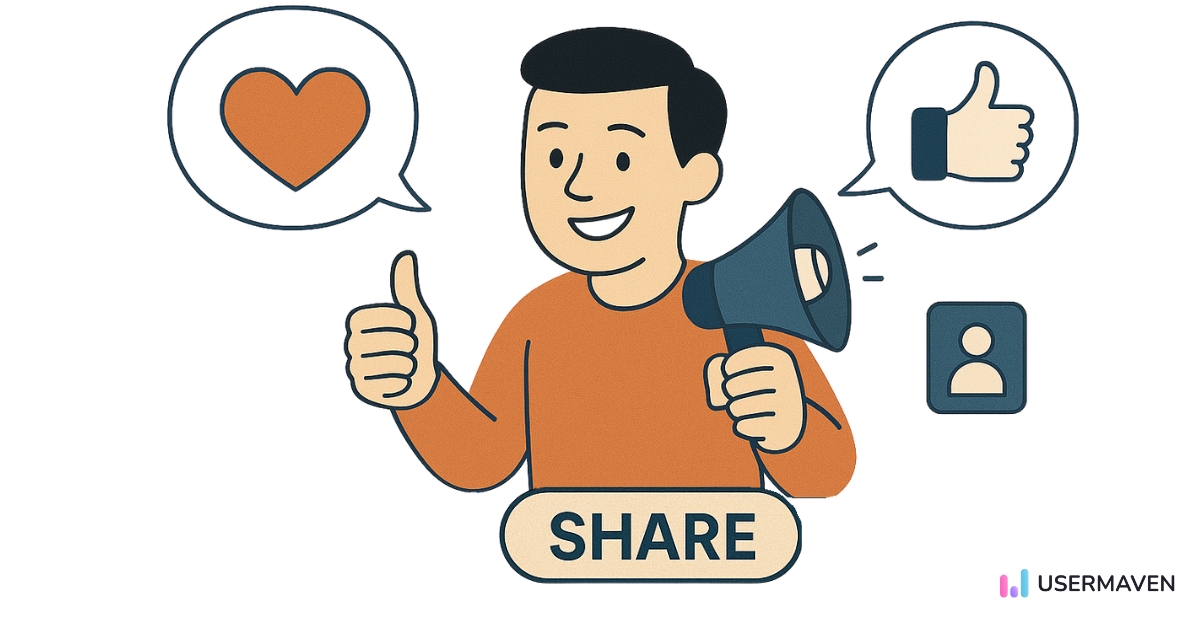
Common activities in this stage:
- Referral programs: Offer rewards to customers who refer others. This motivates them to talk about your product and invite new users to try it.
- Social media engagement: Encourage customers to share their experiences on social channels. User-generated content builds credibility and increases brand visibility.
- Reviews and testimonials: Ask happy customers for reviews and success stories. These help potential buyers feel more confident when evaluating your product.
Tip to optimize this stage:
Usermaven helps you identify your most satisfied and loyal customers. You can track engagement patterns and spot users who consistently achieve success with your product. For example, you might discover that customers who complete onboarding webinars are more likely to share referrals. This insight helps you strengthen your advocacy strategy.
Example:
ContentStudio offers exclusive offers to users who refer others to their platform. By rewarding advocacy, they turn satisfied customers into brand ambassadors, driving new business through word-of-mouth.
Additional SaaS-specific customer journey stages
While the five core steps of the customer journey work for all industries, SaaS companies often rely on two extra stages to reflect how users interact with software.
These stages are not separate from the main journey. Instead, they sit within the retention and decision phases. However, they deserve dedicated attention because they directly influence long-term usage, engagement, and revenue.
By focusing on onboarding and adoption, SaaS brands can help users see value quickly, integrate the product into their workflow, and ultimately become loyal, active customers.
6. Onboarding stage
For SaaS brands, onboarding is critical because it determines whether a user sticks around or churns early. This stage helps users understand your product and see its value from day one.
What customers are thinking:
“Can I use this easily? Will it solve my problem?”
How to optimize onboarding:
- Offer guided walkthroughs to show users how to navigate your product.
- Highlight the “first success” steps clearly to give users quick wins.
- Provide interactive tutorials that teach users by doing.
- Personalize onboarding flows based on user goals.
- Track time-to-first-value (TTFV) closely to identify friction points.
Key onboarding metrics:
- Activation rate
- Onboarding completion rate
- Time to first value
- Early churn
- Feature adoption in the first seven days
7. Adoption stage
Adoption occurs when users move beyond experimentation and start actively using your core features. This stage is essential for long-term retention and expansion.
What customers are thinking:
“This fits perfectly in my workflow.”
How to drive deeper adoption:
- Highlight advanced features that provide additional value.
- Use in-app nudges to guide users toward important actions.
- Send behavior-based email reminders to keep users engaged.
- Offer training sessions to help users master your product.
- Provide templates or playbooks to simplify workflows.
Key adoption metrics:
- Daily active users (DAU) / weekly active users (WAU)
- Feature usage frequency
- Scroll depth
- Support ticket trends
- Expansion revenue
Visualize & optimize
user journeys with Usermaven
Customer journey vs. buyer’s journey: What’s the difference?
The customer journey and the buyer’s journey sound similar, but they focus on different parts of the overall experience.
The customer journey covers everything a person experiences with your brand, from the first moment they discover it to how they feel long after becoming a user.
The buyer’s journey is much narrower. It focuses only on the steps someone takes before making a purchase, such as researching options and comparing solutions.
A simple way to understand the difference:
- The buyer’s journey ends when someone hits “buy.”
- The customer journey continues long after that moment.
Here’s a quick side-by-side look:
| Aspect | Customer journey | Buyer’s journey |
| Scope | Covers the full relationship with your brand, before and after the purchase | Focuses only on the steps leading up to the purchase |
| Stages | Awareness, consideration, decision, retention, advocacy | Awareness, consideration, decision |
| Main Focus | Long-term experience, satisfaction, and loyalty | Helping someone make a confident purchase decision |
| Outcome | Stronger engagement and long-term retention | Converting a prospect into a customer |
Understanding both helps you design smoother experiences, from the moment someone discovers your brand to the moment they recommend it to others.
How Usermaven enhances the stages of the customer journey
Usermaven is a powerful tool designed to help businesses track and optimize the stages of the customer journey effectively. Here’s how it helps:
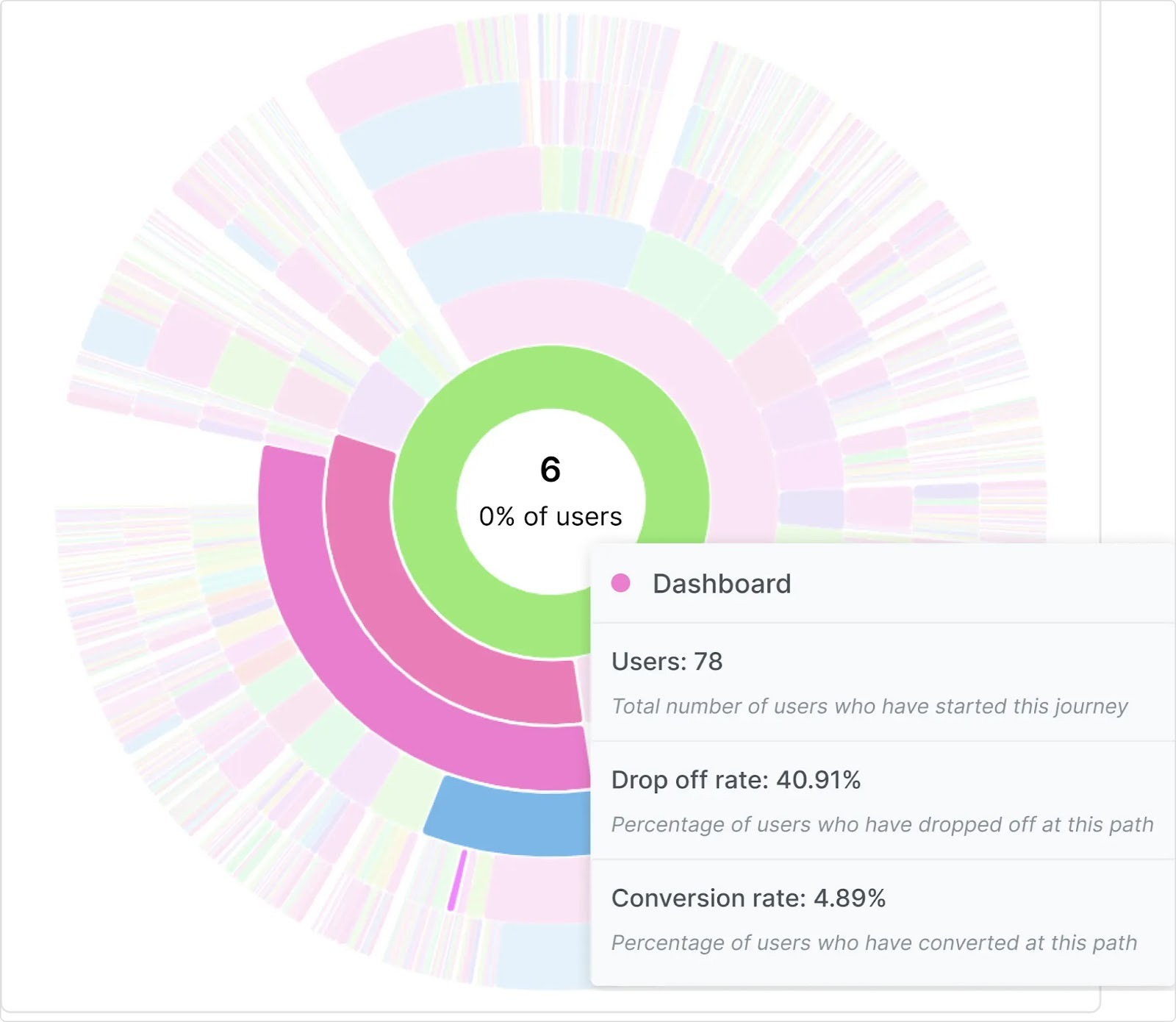
Comprehensive conversion path analysis
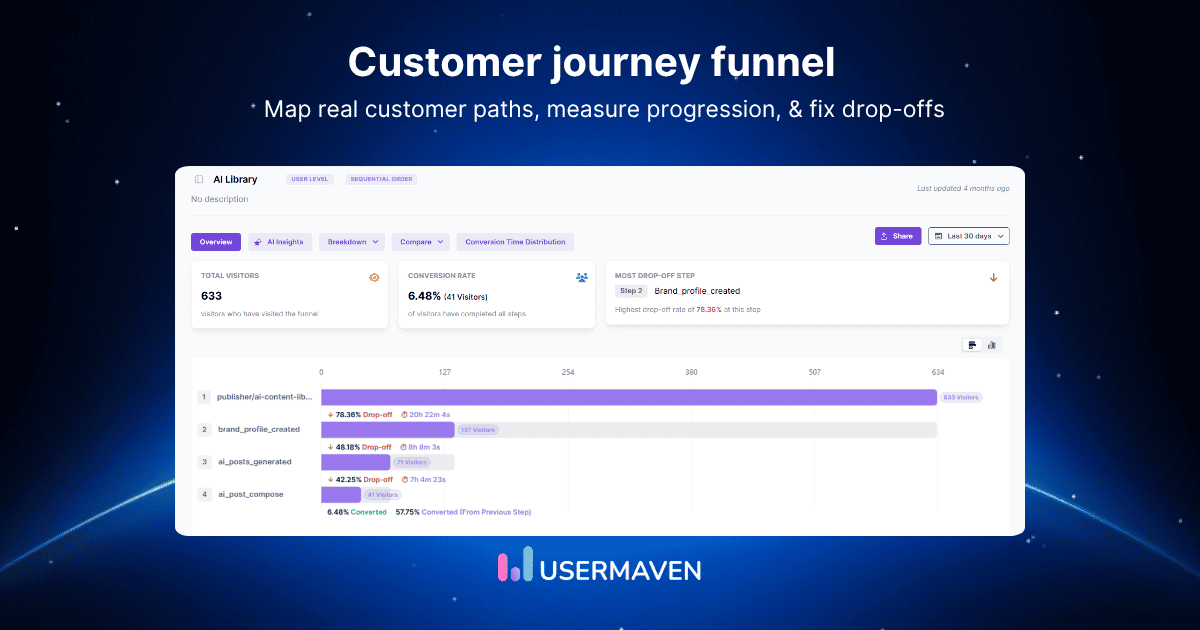
Analyze the entire user journey to understand behavior patterns and identify potential drop-off points. Gain insights into where users spend the most time and where they drop off, helping you optimize every stage.
Detailed interaction tracking
Monitor clicks, page views, and interactions to understand how users navigate your platform. Identify popular features and areas needing improvement to enhance user engagement.
Real-time journey mapping
Visualize user journeys as they happen, allowing for immediate adjustments to improve the user experience. This instant feedback loop helps optimize interactions on the go.
Customizable views
Adjust your journey maps to highlight the metrics and interactions that matter most. A custom analytics dashboard makes it easy to filter data by segment, action, or time period so you can make confident, data-driven changes.
Advanced segmentation
Create targeted user groups based on behavior, preferences, or engagement levels. With segments, you can personalize the experience and improve conversions across the customer journey. Usermaven then helps you track and refine every interaction for better results.
To wrap it up, understanding the customer journey steps is one of the most effective ways to improve how people discover, explore, and stay connected with your brand. Each stage offers its own opportunities to remove friction, strengthen trust, and create experiences that keep customers coming back.
If you want to make better decisions and understand what truly drives results, Usermaven works as a marketing attribution tool that helps you see how people move through every stage, where they get stuck, and what leads to long-term engagement. All the insights are easy to follow and built to support teams that want clarity instead of guesswork.
Ready to see Usermaven in action? Explore the platform or book a demo for a closer look.
Visualize & optimize
user journeys with Usermaven
FAQs
What is the main purpose of a customer journey?
The main purpose is to understand how people interact with your brand at every stage. This helps you remove friction, improve messaging, and create experiences that turn first-time visitors into loyal customers.
How do I know if my customer journey has gaps?
Common signs include low engagement, confusing paths to conversion, inconsistent messaging, or a high number of users dropping off before completing key actions. Analytics can highlight where these gaps appear.
Do all customer journeys follow the same structure?
Not always. The core stages remain similar, but the order, length, and touchpoints can change based on your industry, pricing model, or customer behavior.
How often should I review or update my customer journey?
It’s a good idea to review it every few months or whenever you launch new features, update your website, or notice changes in user behavior. A journey is not static. It evolves as your product and audience evolve.
What’s the biggest mistake brands make with customer journeys?
Focusing only on acquiring new customers and ignoring retention. The journey doesn’t end at purchase. Post-purchase experience, support, and engagement directly influence loyalty and advocacy.
Can different customer segments have different journey paths?
Yes. New users, returning users, and power users usually move through the journey differently. Creating segment-specific journeys helps deliver more relevant experiences.
How do customer journey steps improve marketing performance?
Updated

Written by
Imrana Essa
SaaS Marketing Lead
Imrana Essa is a marketing lead and content strategist with 8+ years of experience creating and leading content for B2B and SaaS brands. She specializes in marketing analytics, attribution, content strategy, and organic growth, translating complex marketing concepts into clear, actionable insights. Her work focuses on helping marketers understand performance, make data-informed decisions, and build strategies that contribute to sustainable growth.
All articles by Imrana →